Photonic


E-MARCOT


European Multi-Array of Combined Telescopes

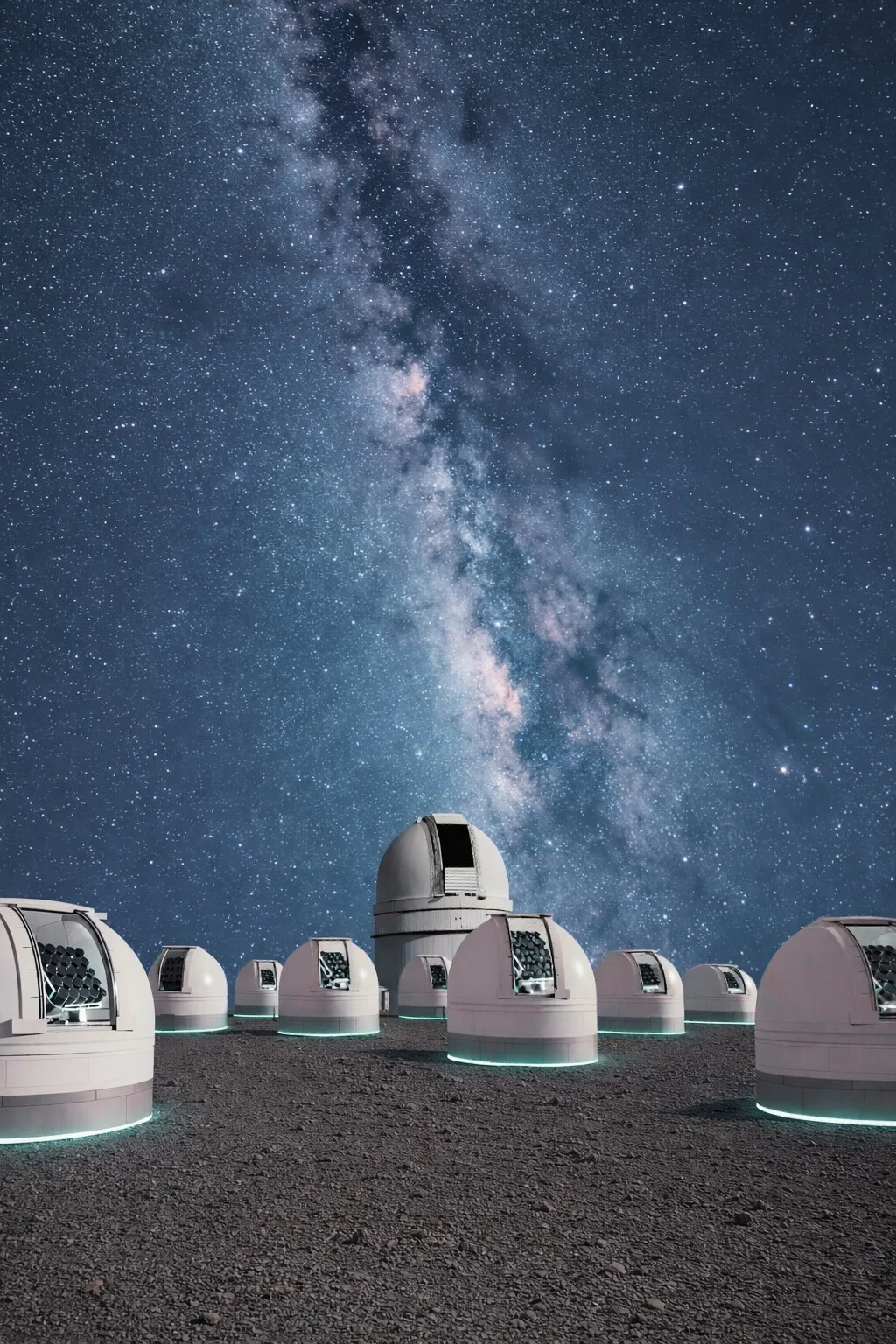
E-MARCOT is a novel concept for a large-aperture telescope based on innovative photonic lantern technology. Designed for scalability and efficiency, this disruptive approach enables massive exoplanet surveys that are impractical with traditional facilities. By making large-scale exploration more accessible, E-MARCOT takes a decisive step forward in understanding distant worlds and the prevalence of life beyond Earth.

In collaboration with

Abstract Fluid Shape

News

Project milestones and activities

Photonic E-MARCOT Workshop

November 2025 — International workshop bringing together experts in astrophotonics, instrumentation, and exoplanet science to discuss the scientific and technological roadmap of Photonic E-MARCOT, foster collaborations, and explore new science cases enabled by photonic-based astronomical infrastructures.

More information about the workshop programme, speakers, and registration is available on the official event website

MARCOT Pathfinder Commissioning Completed

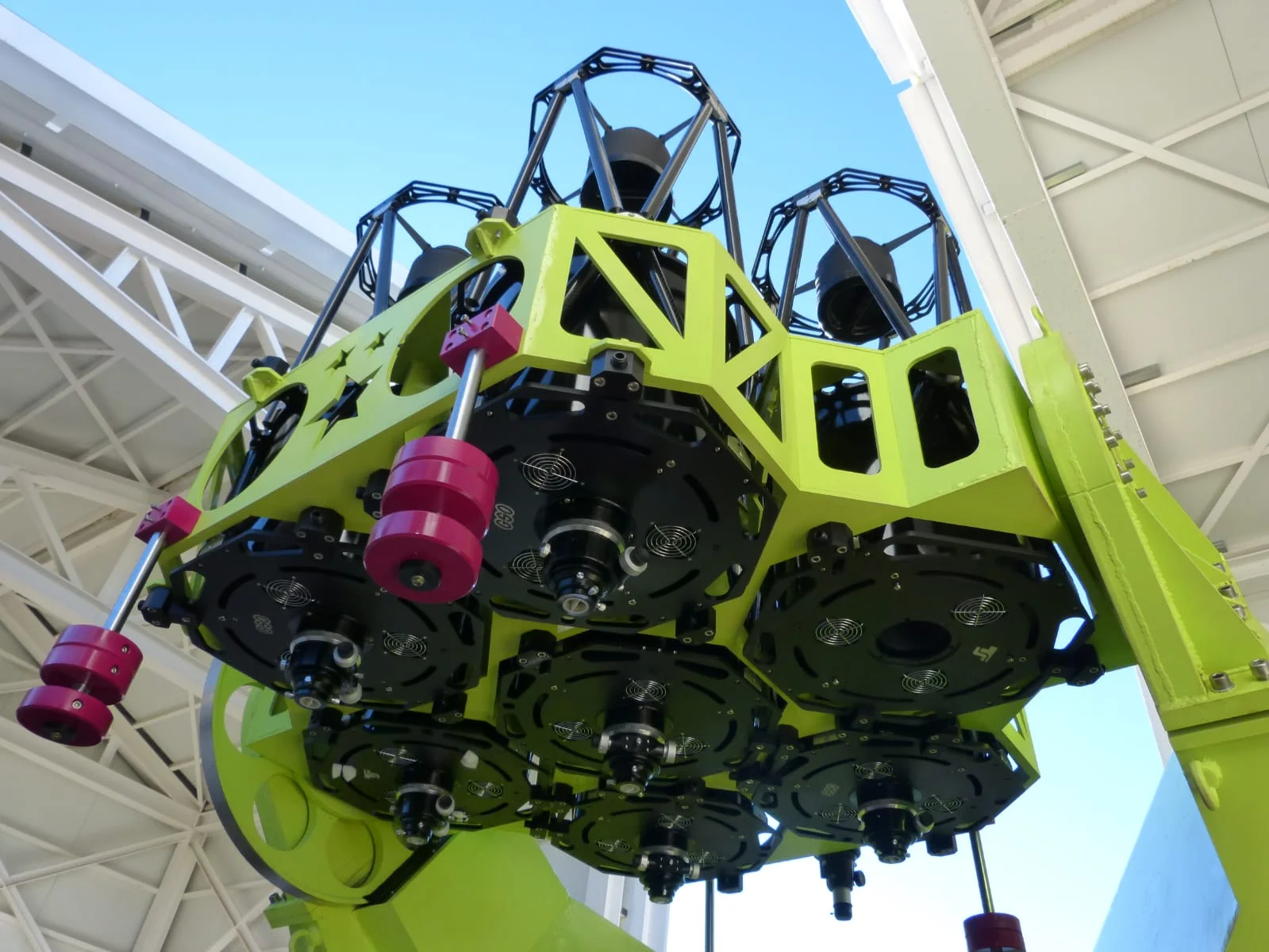
February 2023 — The commissioning of the MARCOT Pathfinder was successfully completed, marking the transition to routine on-sky operations. The pilot facility is now fully operational to validate photonic and instrumentation concepts, test observing strategies, and perform technology demonstrations under real observing conditions.

This milestone provides a stable, operational platform to de-risk key technologies, refine performance metrics, and accelerate the development roadmap towards the next phases of the project.

EPIC Meeting

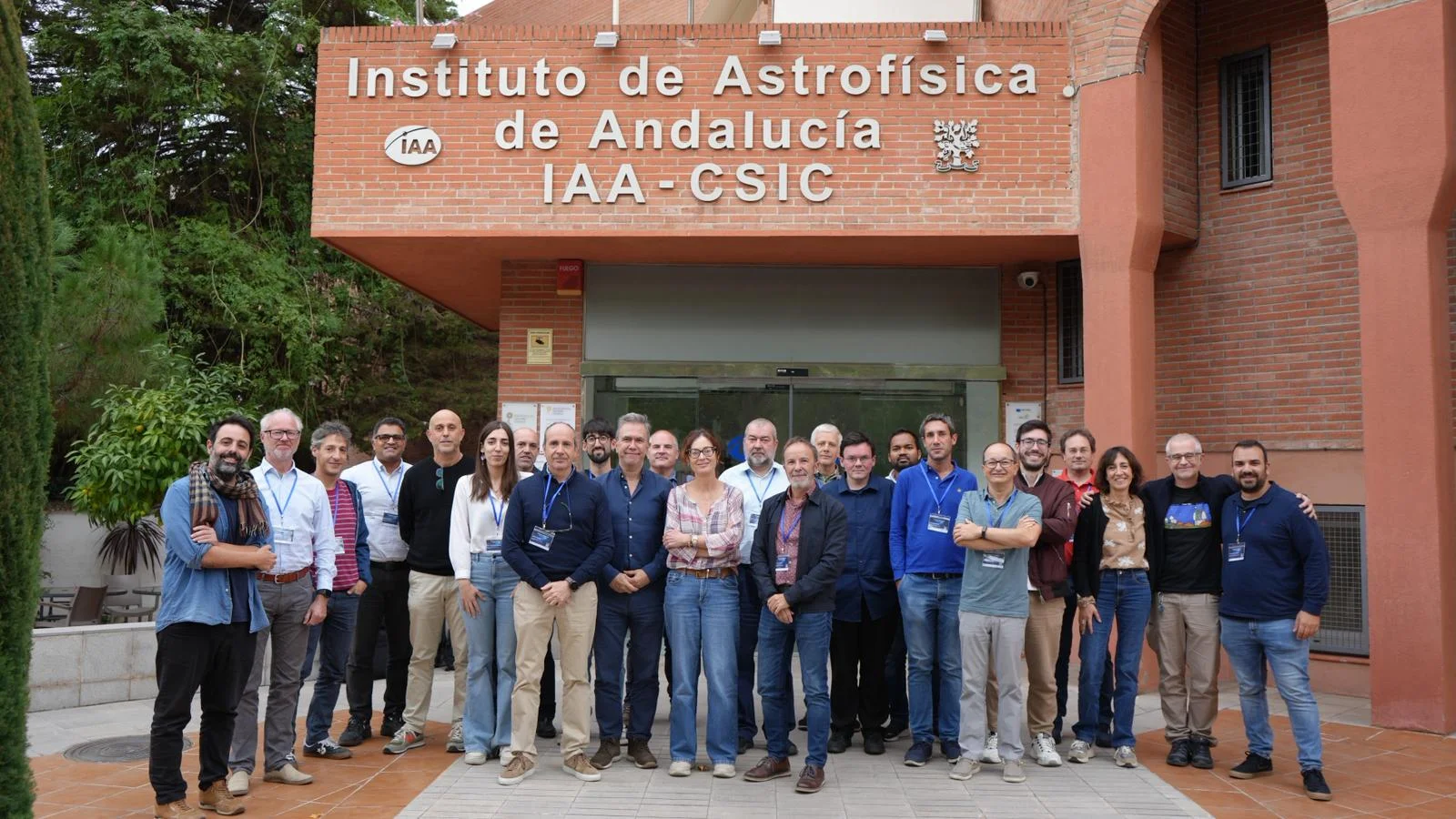
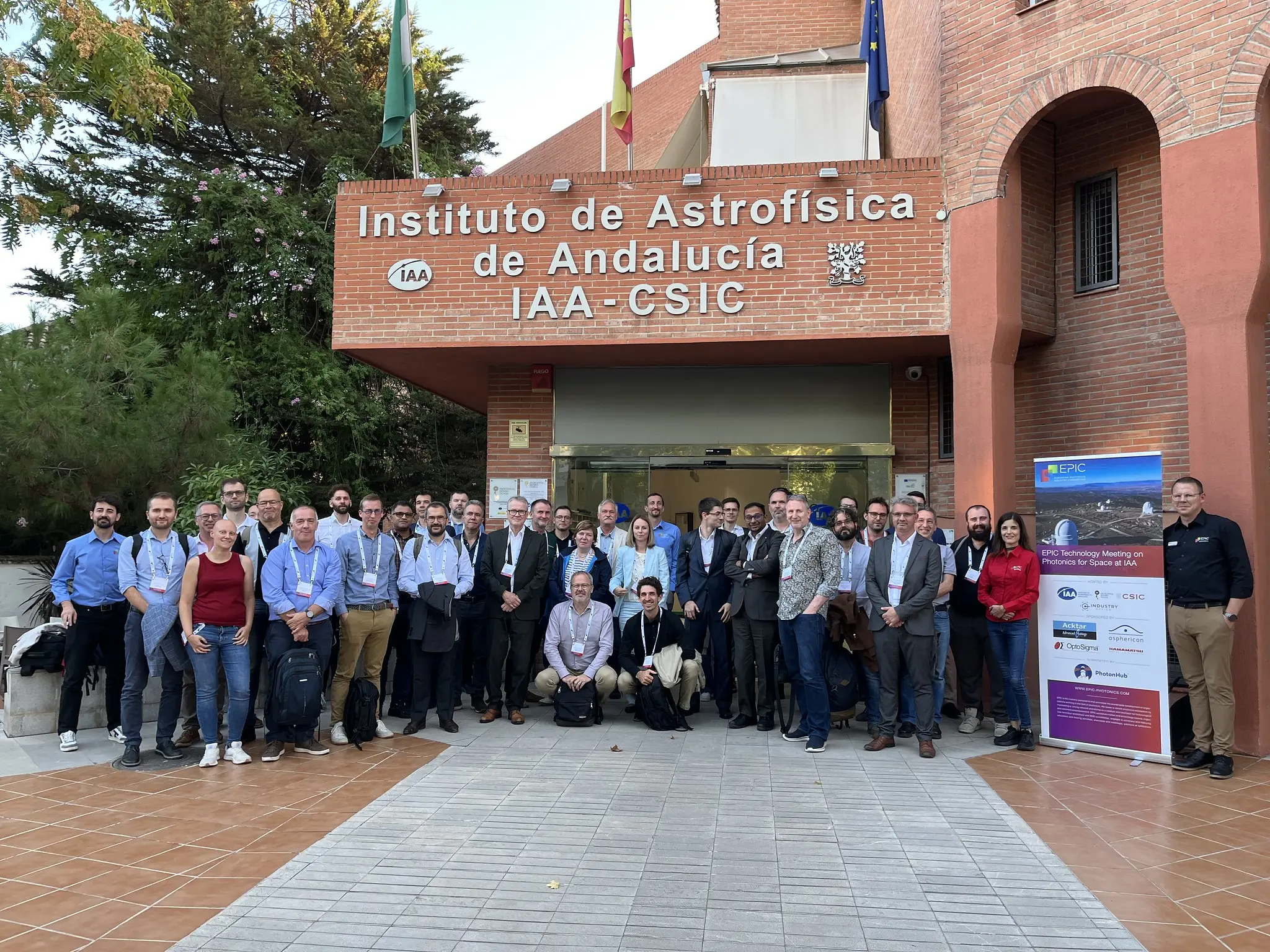
October 2025 — The Instituto de Astrofísica de Andalucía (IAA-CSIC) hosted the EPIC 2025 Technology Meeting on Photonics for Space, bringing together leading experts in astrophotonics, space instrumentation, and advanced optical technologies. The meeting fostered discussions on cutting-edge developments in photonic systems for space applications and strengthened international collaborations in the field. This event further reinforces the strategic role of IAA-CSIC and Photonic E-MARCOT within the European astrophotonics community.

About

Learn More About Photonic E-marcot
About Image

Photonic E-MARCOT is a modular astronomical facility designed for high-resolution spectroscopy and wide-field, high-dynamic range imaging at subarcsecond resolution. The project aims to define the conceptual design and construction plan of a new European telescope that achieves a large effective aperture at a lower cost. This innovative idea combines multiple identical optical assemblies (mirrors) to simulate a giant aperture. Photons are collected via optical fibers connected to each assembly and merged through a novel multimode-multimode photonic lantern, which then feeds a high-resolution spectrograph. Each optical assembly also includes a low-noise detector for guiding and centering, whose images can later be combined into a single frame. This approach delivers a signal-to-noise ratio comparable to a single large telescope, but with enhanced resolution, dynamic range, and a larger field of view. By significantly reducing costs, it enables the creation of next-generation large telescopes, adaptable to future technological advances thanks to the possibility of replacing mirrors. The first prototype unit has already been developed and installed at Calar Alto Observatory.

Modular Design, Infinite Possibilities

We create a large, effective telescope by combining multiple smaller mirrors, offering flexibility, scalability, and reduced costs. A truly adaptive concept for the future of astronomy.

Cutting-Edge Photonic Technology

We leverage advanced photonic lanterns to seamlessly combine light from each module, enabling high-resolution spectroscopy and wide-field imaging like never before.

Technology

Innovative Astrophotonics

An Innovative Astrophotonic Breakthrough

Photonic lanterns have emerged over the last decade as a highly innovative technology in astronomical instrumentation, redefining how light is transported and controlled between telescopes and their instruments.

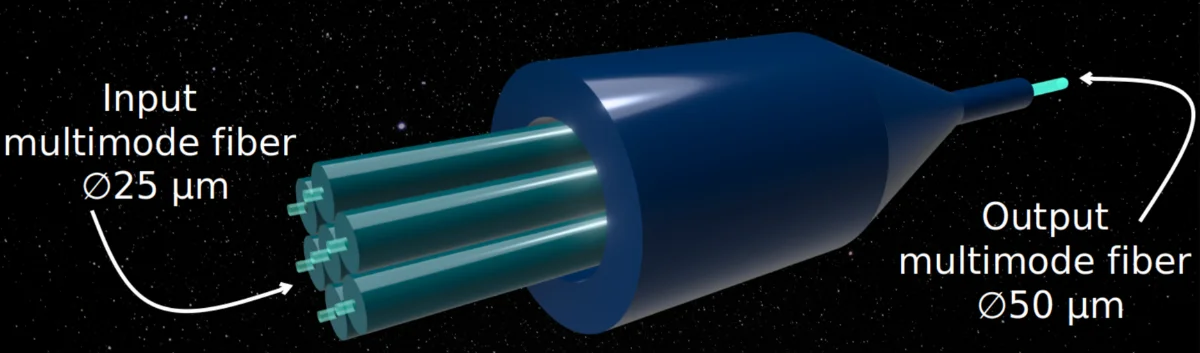
We are pushing this technology beyond its conventional limits by developing the first multimode-to-multimode photonic lantern. This breakthrough concept reverses the traditional operating scheme: instead of splitting light, it efficiently combines signals from multiple multimode fibers into a single output.

This innovative approach enables large photon gains without the need for adaptive optics, increasing sky coverage and sensitivity. We have achieved efficiencies exceeding 95%, even at challenging blue wavelengths. This pioneering technology forms the technological backbone of Photonic E-MARCOT and represents a disruptive advance with impact well beyond astronomy.

Conceptual view of photonic light transport and control
>95%
optical efficiency
stable across the optical spectrum
Multimode-to-multimode photonic lantern technical schematic

Science

Check Our Science goals

From Detection to Physical Understanding of Exoplanets

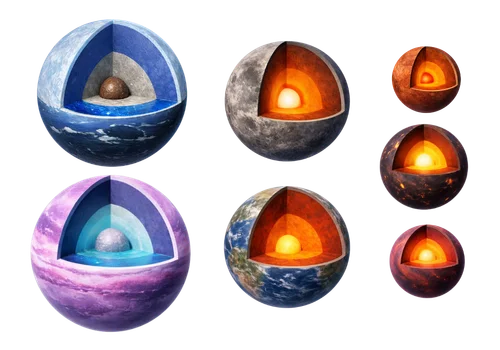
Thousands of exoplanets are known today, but for most small planets their masses remain poorly measured. While space missions such as Kepler, TESS and CHEOPS have provided precise planetary radii, the lack of accurate mass measurements still limits our ability to understand their true nature. Photonic E-MARCOT addresses this challenge by enabling a dedicated large-scale radial-velocity survey focused on small exoplanets. By combining a scalable photonic telescope array with high-precision spectroscopy, E-MARCOT will measure the masses of hundreds of nearby planets with unprecedented accuracy. These measurements are a critical step toward understanding planetary interiors and compositions, transforming exoplanet science from simple detections into a physically driven exploration of planetary diversity.

Science case illustration

Revealing the Diversity of Exoplanet Atmospheres

Exoplanet atmospheres hold the key to understanding how planets form, evolve and potentially become habitable. This is especially true for super-Earths and sub-Neptunes, the most common planets in the Galaxy, whose atmospheric properties remain largely unknown and have no analogs in the Solar System. Photonic E-MARCOT will enable a new generation of atmospheric studies by combining high-resolution spectroscopy with a scalable, high-throughput photonic telescope array. This approach allows robust molecular detections and atmospheric characterization even in the presence of clouds and hazes, complementing space-based observations. By extending atmospheric measurements to a statistically significant sample of planets, from small sub-Neptunes to warm and hot gas giants, E-MARCOT will provide a coherent framework to connect atmospheres with planetary interiors, formation pathways and global diversity, paving the way toward a deeper understanding of worlds beyond our own.

Science case illustration

The Last Uncharted Regime of Planet Formation

Ultracool stars remain one of the least explored regimes of planet formation. While planet occurrence rates are well constrained for most stellar types, they are still poorly known for the smallest and coldest stars, despite theoretical models predicting that Earth-sized planets should be common around them. Only a few planetary systems have been detected around ultracool stars so far, leaving open the question of whether planets are intrinsically rare or simply difficult to detect around these hosts. Addressing this uncertainty is essential to understand the physical limits of planet formation. Photonic E-MARCOT will tackle this problem through a large-scale blind radial-velocity survey of ultracool stars. By providing occurrence rates independent of orbital alignment, this program will establish whether terrestrial planets are abundant around the smallest stars or whether a fundamental barrier limits their formation.

Science case illustration

Complementary Science Cases

A fraction of the available observing time will be allocated to complementary science programs, broadening the scientific impact of the facility beyond its primary drivers. Potential applications include Solar System science, stellar and galactic astrophysics, extragalactic studies, cosmology, and other innovative or technology-driven investigations. The project adopts an open and flexible approach, encouraging high-impact proposals that can benefit from this infrastructure. Researchers interested in exploring such opportunities are invited to contact the project team to discuss feasibility and potential scientific synergies.

Project Roadmap

From vision to discovery
Phase 0 — Concept & Architecture

From scientific vision to instrumental design

Definition of the scientific drivers, observational philosophy, and photonic architecture that form the foundation of the Photonic E-MARCOT project

Phase 1 — MARCOT Pathfinder

Technology and science validation on sky

On-sky demonstration of key concepts using the MARCOT Pathfinder, validating performance, stability, observing strategies, and scientific potential under real conditions.

Phase 2 — Photonic E-MARCOT (5-m Class)

Scaling up to science-driven operations

First full-scale photonic observatory, enabling systematic and efficient high-precision studies of exoplanets and stellar systems, and serving as a bridge between current facilities and the ELT era.

Phase 3 — Photonic E-MARCOT (15-m Class)

A transformational photonic facility

A large-aperture, fully photonic observatory designed for breakthrough science, population-level surveys, and long-term synergies with space missions and next-generation ground-based telescopes.

Team

Check Our Team

Jesus Aceituno

Principal Investigator

Director of Calar Alto Observatory (CAHA), providing institutional leadership and strategic support for the Photonic E-MARCOT initiative.

Pedro J. Amado

Principal Investigator

Coordinator of the IAA-CSIC Astrophotonic Laboratory and Head of the Stellar Physics Department

Stefan Cikota

Project Manager

Delivering cross-sector project leadership at the intersection of observatory science, academia, and industry.

Francisco J. Pozuelos

Project Scientist

Specialist in exoplanet detection and characterisation combining ground- and space-based observations.

Miguel Andrés Sánchez

System Engineer

Responsible for system architecture, requirements, interfaces, and end-to-end integration and verification.

Kalaga Venu Madhav

Technology Development

Head of the Astrophotonics Group at AIP, leading the development of advanced photonic technologies for astronomical instrumentation.

Sergio León Saval

Technology Development

Leader in astrophotonics at the University of Sydney, pioneering the development of photonic lantern technology for astronomical instrumentation.

Jose Luis Ortíz

Associate Investigator — Solar System Science

Specialist in minor bodies of the Solar System.

Javier Flores

Telescope Operator

PhD student and CAHA telescope operator.

Marina Centenera

Technology Development

PhD student working on photonic lantern development.

David Pérez Medialdea

Technology Development

Engineer working on photonic lantern development.

María Isabel Ruiz López

Technology Development

Engineer working on photonic lantern development.

Abani Shankar Nayak

Technology Development

Engineer working on photonic lantern development.

Contact

Find Us